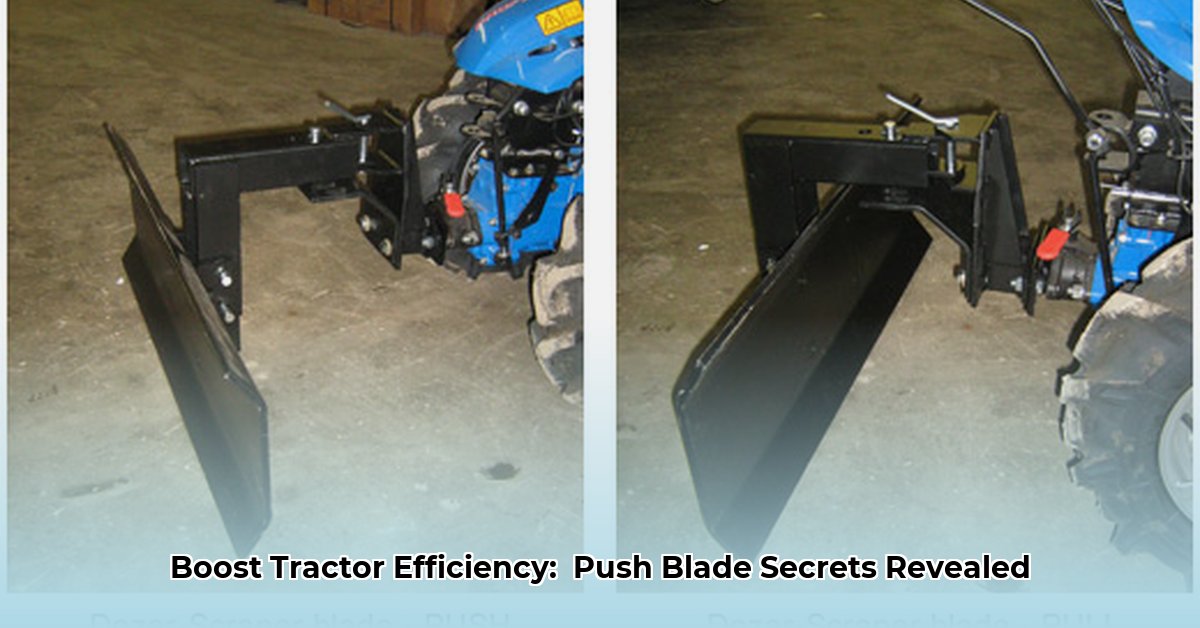
Manual vs. Hydraulic Push Blades: A Farmer's Guide
Choosing the right push blade for your tractor is crucial for efficient and sustainable farming. This guide helps you navigate the options, focusing on manual and hydraulic blades, to ensure you select the best tool for your needs and budget. We'll cover everything from blade types and sizing to installation, operation, and maintenance. For more information on tractor snowplows, see this helpful resource.
Types of Front Blades: Manual vs. Hydraulic
The first key decision is between a manual and a hydraulic push blade. Manual blades offer simplicity and affordability, ideal for smaller farms or lighter tasks like clearing snow around buildings or moving small piles of materials. They require more physical effort from the operator; adjusting the blade angle is limited, impacting precision.
Hydraulic blades, conversely, offer significantly more power and control. Their motorized operation makes moving larger quantities of material easier and more efficient, allowing for precise angle adjustment. While the initial investment is higher, this often translates into long-term savings in time and labor. This is especially beneficial for larger farms tackling tasks like land leveling or extensive snow removal.
| Feature | Manual Push Blade | Hydraulic Push Blade |
|---|---|---|
| Cost | Lower initial investment | Higher initial investment |
| Effort Required | High; physically demanding | Low; easier operation |
| Angle Adjustment | Limited; often fixed positions | Precise; wide range of adjustments |
| Maintenance | Simpler; less costly | More complex; potentially higher cost |
| Efficiency | Lower for large-scale tasks | Higher for large-scale tasks |
Will the increased efficiency of a hydraulic blade justify the higher initial cost? This depends entirely on the scale of your operation and the frequency of use. A small farm might find a manual blade perfectly adequate, while a large operation will probably see a rapid return on investment with a hydraulic model.
Choosing the Right Blade: A Step-by-Step Framework
Selecting the correct blade involves considering several factors: tractor compatibility, intended use, and budget.
Step 1: Tractor Compatibility: Consult your tractor's owner's manual to determine the maximum recommended blade size and weight. Exceeding these limits can damage your tractor. Check the hitch type – ensuring compatibility is paramount. The tractor's horsepower (HP) also dictates the blade's size and type.
Step 2: Intended Use: Different tasks require different blades. Snow removal often benefits from wider blades, potentially constructed from materials like polyurethane (which minimizes sticking) rather than steel. Soil management may necessitate a smaller, more maneuverable blade made of steel for durability.
Step 3: Budget: Consider the total cost of ownership – including initial purchase, maintenance, repairs, and potential fuel consumption differences between operating a manual versus a hydraulic blade. For infrequent use, leasing a blade might be a more cost-effective option.
Installation and Operation: A Safe Approach
Installing a push blade typically involves following the manufacturer's instructions, which are usually clear and concise. However, always prioritize safety:
Pre-Installation Inspection: Thoroughly inspect the blade and its connection points for any damage before installation. Ensure all pins and brackets are clean and functional.
Secure Attachment: Adhere strictly to the manufacturer's instructions. Ensure the blade is securely attached to the tractor before operating.
Safe Test Run: Test the blade in a safe, open area to familiarize yourself with its controls and responsiveness before performing any serious work.
Safe Operation: Maintain awareness of your surroundings. Keep speeds moderate, especially when working near obstacles or people.
Maintenance and Repair: Extending Blade Lifespan
Regular maintenance is key to maximizing your blade’s lifespan and preventing costly repairs:
Regular Sharpening: Sharpen the cutting edge frequently for optimal efficiency and safety.
Lubrication: Keep moving parts properly lubricated as recommended by the manufacturer.
Post-Use Inspection: Inspect the blade for wear and tear after each use, addressing any issues promptly.
Ignoring maintenance can accelerate wear and lead to significant repair costs.
Conclusion: Maximize Your Farm's Efficiency
Choosing the right push blade is critical for optimizing your tractor's efficiency and ensuring your farm's sustainable operation. Consider your specific needs, tractor capabilities, and budget carefully. Don't hesitate to seek advice from experienced local agricultural professionals or equipment dealers. They can provide valuable insights and help you find the perfect solution.
Turning Your Tractor into a Multi-Tool Earth Mover
The front-mounted push blade is one of the most transformative attachments you can add to your tractor, instantly upgrading its utility from a simple hauler or tiller to a serious earth-moving machine. Unlike rear-mounted box blades, the push blade offers superior visibility, allowing you to see exactly where your material is moving and how the edge is interacting with the terrain. This control is critical whether you are clearing heavy snowdrifts from a long driveway, grading a gravel path that has been rutted by rain, or simply pushing piles of brush and debris into an accessible heap. It attaches quickly, typically using a universal quick-hitch system, meaning you can transition from mowing to grading in a matter of minutes, significantly increasing your overall productivity throughout the changing seasons.
When selecting a push blade, understanding the articulation options is key to maximizing its effectiveness across varied tasks. Hydraulic angle adjustment allows the operator to change the pitch and angle of the blade on the fly without leaving the seat, a necessity for efficient operations like snow removal or crown grading where rapid adjustments are needed to shed material effectively to the side. Always look for models constructed from heavy-gauge steel with replaceable cutting edges, ensuring longevity and reliable performance against abrasive materials like packed ice or rocky soil. Investing in a high-quality push blade transforms your tractor into a versatile workhorse capable of year-round tasks, delivering excellent return on investment by eliminating the need to rent specialized equipment for common property maintenance and clearing projects.